Why Airtel made its shareholders wait thirteen years
Airtel's business grew for thirteen years while its stock barely moved, because the cash that growth produced was consumed before it reached shareholders. Four things ate it in turn: a $10.7 billion debt-funded purchase of Zain's African operations in 2010, the never-ending cost of spectrum and network, Jio's 2016 price war that roughly halved revenue per user, and a backdated ₹28,450 crore AGR bill in 2019. Only once the industry shrank to three players and tariffs rose did the same network finally turn into cash, and the stock re-rate.
In 2007, Bharti Airtel was one of the most admired companies in India, the telecom champion that had put a mobile phone in ordinary hands. Over the next thirteen years its revenue and its subscriber base grew enormously, it became a household name across two continents, and it never stopped getting bigger.
Buy the stock in 2007, hold it to 2020, and you would have made almost nothing. Thirteen years of waiting, on a business that grew the whole time.
This is the mirror image of the Mahindra story. Mahindra's stock fell because the business briefly broke. Airtel's went nowhere while the business kept getting stronger. The two together point at the same idea: a growing business and a rewarding stock are not the same thing.
Airtel's growth was real. The trouble was that an acquisition, then the cost of the network, then a price war, and finally the government kept eating every rupee of it before it could reach the people who owned the company.
A business that grew, and a stock that didn't
Let's start with the puzzle. Across these thirteen years Airtel's revenue grew several times over and its customer base ran into the hundreds of millions. By any measure of size it was a success. The stock still sat still.
How can a business grow that much and reward its owners so little?
Two things have to be true before growth reaches a shareholder. The company has to keep some of the cash its growth throws off, instead of pouring it all back just to stay in the game. That cash is what investors call free cash flow. And it has to be able to charge enough for what it sells, what investors call pricing power, so that more customers actually turns into more money kept.
For most of this story Airtel had neither. Adding customers cost it enormous sums up front, and it was in no position to set its own prices.
Two questions run underneath the whole thirteen years. Keep them in mind through every chapter that follows:
Does Airtel get to keep the cash its growth produces, or is it all spent again just to stay in business?
Does Airtel get to choose its price, or is someone else setting it?
What follows are four mouths. Each one ate a share of Airtel's growth before it could reach you, and each one is really an answer to one of those two questions.
- Does Airtel get to keep the cash its growth produces, or is it all spent again just to stay in business?
- Does Airtel get to choose its price, or is someone else setting it?
Mouth one: the African adventure
In March 2010 Airtel made the biggest bet of its life. It bought the African operations of Zain, a Middle Eastern telecom group, for $10.7 billion, paid for almost entirely with borrowed money.
And honestly, you can see why they did it. Overnight it inherited around 42 million customers and networks in fifteen African countries. Airtel had already shown it could sell cheap mobile service to hundreds of millions in India, and Africa had a billion people and few phones. The same recipe, surely, would work again.
But the price of the bet was the balance sheet. Before the deal Airtel owed almost nothing. After it, net debt swelled toward ₹60,000 crore, more than the entire company had been worth on its own, and that debt had to be serviced every year whether Africa made money or not.
The recipe did not travel. India was one country and one currency; Africa was fifteen governments and fifteen currencies, and those currencies kept losing value. Airtel earned in local money like the Nigerian naira but owed in dollars. Each time the naira weakened, the same African profit bought fewer dollars, so it covered less of the loan, even though the loan itself never shrank.
Running the network cost more than at home, too. A tower needs steady power, and mains electricity across much of Africa was unreliable, so Airtel had to bolt a diesel generator onto tower after tower and burn fuel around the clock. Thousands of towers drinking diesel was a permanent cost its Indian towers, plugged into the grid, never carried. The good customers, meanwhile, were already taken: MTN and Vodacom had been there for years and were happy to cut their own prices rather than hand anyone to a newcomer.
Airtel tried to stop the bleeding. It sold its towers to specialists and paid rent instead of owning them, and it exited some of the worst markets. Still, that fix didn’t touch the deeper hole: each customer barely paid enough to cover the costs piling up on its balance sheet, trapped on a mountain of debt. The unit kept losing money year after year, and every year of those losses and interest was paid for by the Indian shareholder, who saw nothing come back.
In 2019 the market finally put a number on it. Listed in London, the African business was valued near $3.9 billion, about a third of the $10.7 billion Airtel had paid nine years earlier. The listing did raise fresh cash to start cutting the debt, which mattered. But for most of the lost decade this deal only drained the owner.
Mouth two: the treadmill that never stops
Leave Africa aside; even at home, a telecom company can never stop spending, and this is the mouth people notice least.
It helps to hold it next to a different kind of business. A software company can add a million users with barely any extra cost, because the product is already built and each new user is close to pure gain. Telecom runs the other way round. Before Airtel can earn a rupee from new customers or faster data, it has to spend enormous sums building the thing that serves them. The investment comes first, the revenue only later, and the investment never really stops.
Start with the one thing a mobile network cannot run without: spectrum, the invisible airwaves that carry your call between phone and tower. There is only so much of it, and it belongs to the government, which rents out slices through auctions. Because every operator needs it and the supply is fixed, those auctions become bidding wars that run into thousands of crores. And you pay again and again, because each new generation of technology needs its own airwaves. Still digesting the African debt, Airtel had to bid billions for 3G in 2010, then billions more for 4G a few years later.
The airwaves are only half the bill. The other half is the physical network, the towers and antennas and equipment that send the signal. As India moved from making calls to streaming video, the data pouring through the network exploded, and Airtel had to keep spending just to add capacity and stop it choking. This heavy, repeated spending on long-lived equipment is called capital expenditure, or capex, and in telecom it never ends, because the next technology is always arriving.
Here's the strange part: a telecom company can report a healthy profit and still hand its owners almost nothing, because profit is counted before all that spending on spectrum and equipment. What matters to an owner is the cash left after the business has paid for everything it needs just to keep running and stay competitive. That leftover is free cash flow. Through these years Airtel's was chronically thin: so much was swallowed by auctions and network spending that little was left over, however respectable the profit line looked.
Mouth three: the Jio earthquake
On 5 September 2016, a new rival arrived. Reliance Jio, backed by Mukesh Ambani, launched with free voice calls and months of free data, then near-zero prices after that. It was the most aggressive launch Indian business had seen, and it was designed to drag the established operators into a fight they could not win.
How does a company give its product away and live? Deep pockets and a long game. Reliance could afford to lose money for years to buy the market, and Jio's network was built only for data, which made it cheaper to run than the older networks its rivals were still patching up. Hook hundreds of millions on cheap data now, worry about profit later. Free was not generosity; it was a way to take the whole market at once.
Now put yourself in Airtel's management, because the position was genuinely impossible. There were two doors, and both were bad. Keep prices where they were, and customers would walk straight to a free rival, shrinking the business Airtel had spent a decade building. Cut prices down to Jio's and keep the customers, but watch the profit on each one collapse. There was no third door that spared the shareholder. Airtel chose the customers, slashing prices to hold its base and accepting that earnings would crater, betting that if it could just outlast the war, the war would eventually end.
The choice shows up in one figure, the money Airtel collected from each customer a month, which the industry calls average revenue per user, or ARPU. It fell from about ₹202 in 2014 to roughly ₹104 after the war, and stayed down for years, because Jio kept prices on the floor and Airtel had to keep matching. The same customers, paying close to half as much.
The whole industry bled together. Charging almost nothing, the weaker operators could not cover their costs, and a field of about a dozen mobile companies was crushed to three, as the diagram below lays out: Jio, Airtel, and a merged Vodafone Idea. Simply surviving that cull was an achievement. It also planted the one thing that would matter at the very end, though nobody was paid for it yet: with only three left, prices might one day be able to rise again.
- Airtel
- Vodafone
- Idea
- Reliance Jio
- Reliance Comm
- Aircel
- Tata Docomo
- Telenor / Uninor
- Videocon
- MTS (Sistema)
- Reliance Jiothe disruptor
- Airtelsurvived, battered
- Vodafone Ideatwo merged into one
Mouth four: the regulatory bomb
Then came a bill almost nobody had braced for. Besides buying spectrum at auctions, telecom companies had agreed, as a condition of their licence, to hand the government a slice of their revenue every year, a kind of running rent for the right to operate. The more you earn, the more you owe.
The fight was over which revenue got sliced. Its name is adjusted gross revenue, or AGR. The companies said it should mean only what they made from phones, the calls and the data. The government said it should mean almost everything they earned, including unrelated income like interest on cash sitting in the bank. The government's version was far wider, and so far larger.
On 24 October 2019, after more than a decade in court, the Supreme Court sided fully with the government, and the ruling reached backwards. It did not just raise fees from then on; it let the government recompute some fifteen years of past fees on the wider definition and demand the shortfall, with interest and penalties, all at once. For companies that had paid on the narrower figure the whole time, the back-dues were staggering.
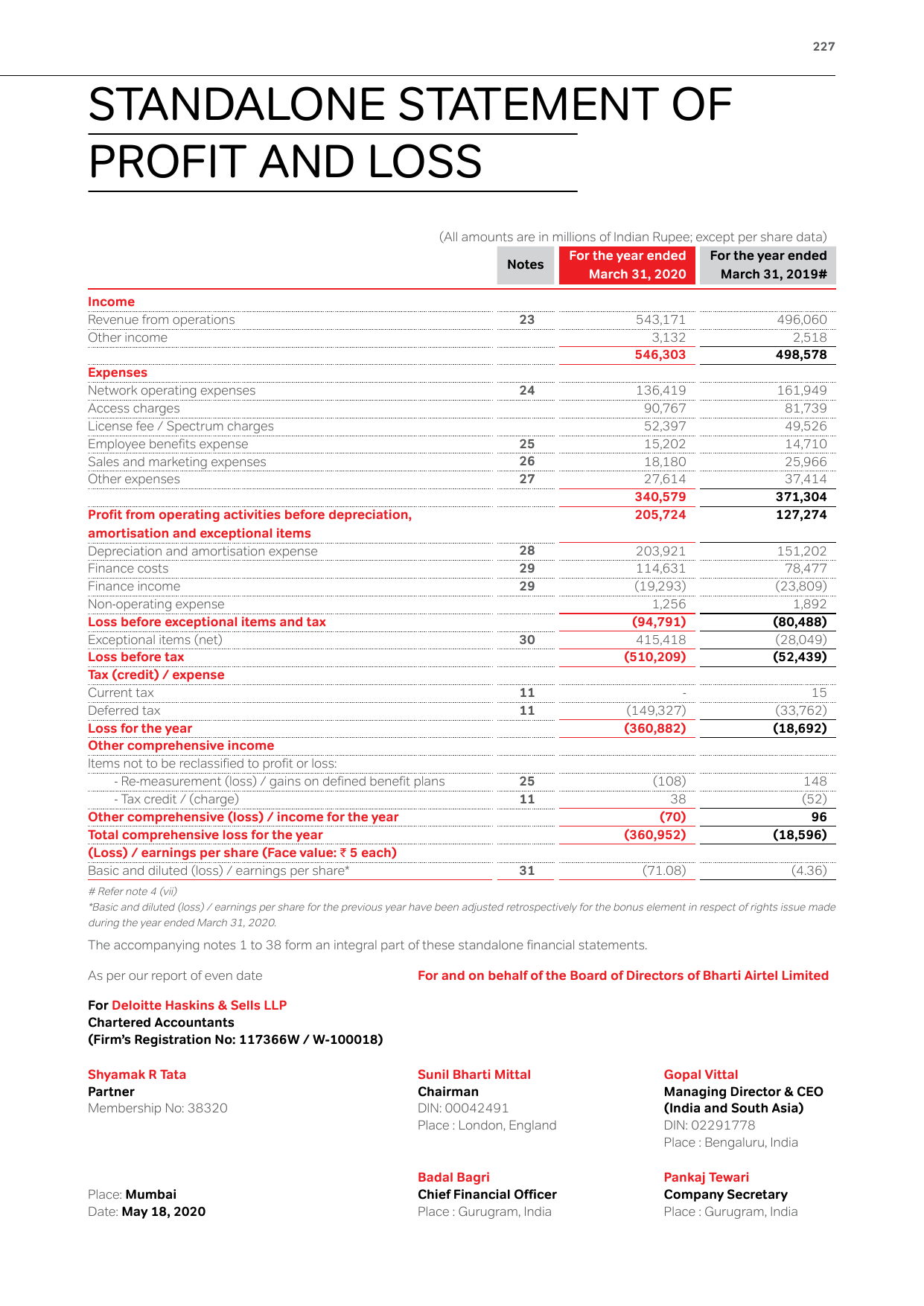
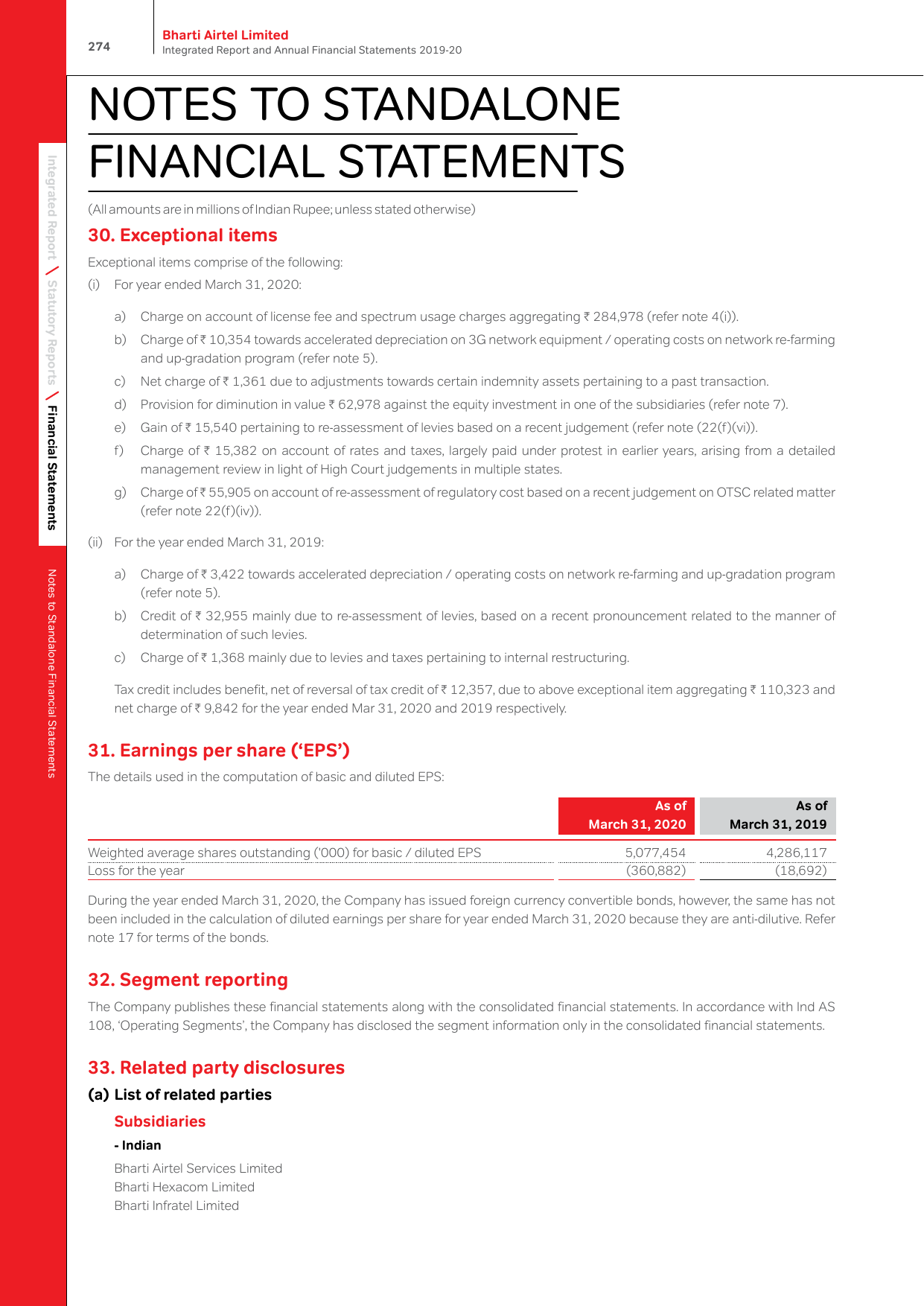
Airtel had to set aside ₹28,450 crore in a single quarter, producing a ₹23,045 crore loss2 for July to September 2019, its largest ever and one of the biggest in Indian corporate history.
Here's the number that changes the story: the number tells a story once you see what the loss would have been without the ruling. Just ₹1,123 crore, small for a company this size. The everyday business was bruised but standing. Almost the entire record loss was one backdated government bill, landed overnight.
And then, at the darkest point, the turn
The reward finally came, and it did not come from growth. Airtel had never lacked growth.
Around 2019 and 2020, three things eased at once. The African business turned profitable and its London listing brought in cash to cut debt. The AGR shock, brutal as it was, was slowly managed down. And the price war finally cooled.
With only three operators left, the thing that had been missing all decade quietly appeared. When a dozen companies were fighting, no one dared raise a price, because a slighted customer had eleven cheaper places to go. With three left, all of them bruised and sick of losing money, each had every reason to raise prices at about the same time, and once they all had, a customer who disliked Airtel's new rate had nowhere cheaper to run to. That is pricing power, the freedom to charge more without being deserted, and Airtel finally had it.
In December 2019 the first real tariff hikes in years arrived, around 30 percent, with more to follow. A price rise matters enormously for a business like this because the big costs were already paid. The towers, the spectrum, the network cost about the same whether a customer pays ₹104 or ₹135 a month. So when the price rises, the extra rupees are not eaten by new costs; they fall almost straight through to profit. A modest-sounding hike, spread across hundreds of millions of customers who cost little more to serve, became a huge swing in earnings.
Revenue per user began climbing, and the data India had grown addicted to could at last be charged for properly instead of given away. Only then, after thirteen years of going nowhere, did the stock break out and begin the long run that rewarded the few who had waited.
What paid them was not the business getting bigger, which it always had been. It was the business finally being allowed to make money.
What you could have seen, and when
It is easy to read this back and say the answer was obvious. It was not. But three of the four mouths eating Airtel's growth were visible in ordinary public documents, years before the stock finally moved, and none of them needed a forecast. They needed a reader willing to open the cash-flow statement.
- March 20109 years before the 2019 London listing valued Africa near $3.9 bnThe Zain deal announcement, and the borrowings note in the annual report that followedLook upThe price, $10.7 billion, next to the borrowings line on the balance sheet. Net debt swelled toward about ₹60,000 crore. Then the finance costs line in the profit and loss account for the years after.It told youAirtel had bought its growth with borrowed money. From then on, the first claim on every rupee the business earned belonged to lenders, not owners. You did not need to know Africa would disappoint. You only needed to see that the interest bill was now permanent while the profits from Africa were only a hope.
- Every quarter from late 20163 years of quarterly warnings before the record loss of Nov 2019Airtel's own quarterly results presentation, which reports average revenue per userLook upThe single figure Airtel calls ARPU, average revenue per user, meaning how much money it collects per customer per month. It fell from about ₹202 in 2014 toward about ₹104.It told youCustomers were still being added, and the money per customer was halving. That is the plainest possible statement that a company has no power to price. Growth in subscriber numbers was hiding a shrinking business.
- Every annual report, 2010 onwardVisible continuously through the entire lost decadeThe cash-flow statement in Airtel's annual reportLook upCompare two lines: cash generated from operations, and purchase of fixed assets plus spectrum payments under investing activities. Read them side by side for five years running.It told youA telecom network has to be rebuilt every few years, so the cash the business earns keeps going straight back into towers and spectrum. When the second line keeps swallowing the first, there is nothing left over for the owner, however fast revenue grows. This is the mouth that never closes, and it is arithmetic, not opinion.
The AGR bill is the honest exception. The licence-fee dispute with the government did sit in the contingent liabilities note at the back of the accounts for years, so a careful reader knew a fight existed. But the size of it, ₹28,450 crore provided in a single quarter, depended entirely on how the Supreme Court would read one word in a contract, and that was not knowable until 24 October 2019. Some risks you can measure. Some you can only know are there.
The numbers behind the lost decade
These figures come from Airtel's own reported results and contemporaneous coverage, linked below. The share-price side of the story is visible on any long-term chart: a stock that went almost nowhere from 2007 to about 2020, while the company's revenue grew several times over.
Questions people ask
- Why did Airtel buy Zain's African operations?
- In March 2010 Airtel paid $10.7 billion for Zain's operations across fifteen African countries, funded almost entirely with debt. The logic was pattern repetition: having sold cheap mobile service to hundreds of millions in India, management believed the same low-cost recipe would work in an under-penetrated Africa with a billion people and few phones, and it inherited about 42 million customers overnight. The bet looked reasonable, but it swelled net debt toward ₹60,000 crore, more than the whole company had been worth, and that interest had to be paid whether Africa earned it or not.
- Why did Airtel's Zain Africa deal disappoint?
- The African business drained cash for most of the decade because the Indian recipe did not travel. Airtel earned in fifteen local currencies, like the Nigerian naira, but owed in dollars, so every time those currencies weakened the same profit repaid less of the loan. Running costs were higher too, with diesel generators powering towers where the grid failed, and entrenched rivals like MTN already held the best customers. The unit lost money year after year. When it listed in London in 2019 it was valued near $3.9 billion, about a third of the $10.7 billion Airtel had paid.
- How did Jio's launch affect Airtel?
- Reliance Jio's arrival on 5 September 2016 forced a price war that cut Airtel's revenue per user roughly in half. Jio launched with free voice and months of free data, leaving Airtel two bad choices: hold prices and lose customers to a free rival, or cut prices and watch the profit on each customer collapse. It chose to defend its base, so average revenue per user fell from about ₹202 in 2014 to roughly ₹104 and stayed there for years. The war also crushed about a dozen operators down to three, which mattered later.
- What was Airtel's ₹23,045 crore AGR loss?
- Airtel's record ₹23,045 crore quarterly loss in late 2019 was almost entirely one backdated government bill, not a collapse in the business. After the Supreme Court's 24 October 2019 AGR ruling, the government could recompute about fifteen years of past licence fees on a much wider definition of revenue and demand the shortfall at once, and Airtel set aside ₹28,450 crore in a single quarter. Strip out that ruling and the underlying business lost only about ₹1,123 crore. The headline was terrifying; the operating reality underneath was bruised but standing.
- What finally turned Airtel's fortunes around?
- Airtel recovered when the industry consolidated to three players and pricing power returned, not because it grew. By 2019 and 2020 the African arm turned profitable and listed, the AGR shock was managed down, and the price war cooled. With only Jio, Airtel and Vodafone Idea left, all could raise tariffs at once and a dissatisfied customer had nowhere cheaper to go. The first real hikes, about 30% from December 2019, fell almost straight to profit because the network's big costs were already paid. Revenue per user climbed, cash returned, and the stock finally broke out.
- Why can a company grow for years and still not reward shareholders?
- Because a rising top line is not a rising return: what reaches the owner is the cash the business keeps and its freedom to price, not its customer count. Airtel grew the whole time, yet an acquisition, relentless network spending, a price war and a regulatory bill each swallowed the growth before it became free cash flow. Only pricing power, and the cash it produced once the industry shrank to three, actually paid shareholders. The same pattern recurs wherever capital, competition or regulation stands between a growing business and its owners.
Sources
- Airtel posts highest-ever loss of ₹23,045 crore after AGR provisioning (BusinessToday) ↗
- Airtel Africa falls in London debut after raising $750 million (Business Standard) ↗
- Bharti Airtel completes Zain Africa deal (Gulf News) ↗
- How Mukesh Ambani won India's mobile data price war (Rest of World) ↗
- Telecom stocks rally on tariff hike, Dec 2019 (Business Standard) ↗
How it unfolded11 moments
- 2007-08Airtel is a market darling at all-time highs, India's telecom champion.
- Mar 2010Buys Zain's African operations for $10.7 billion, funded almost entirely by debt.
- 2010Bids billions for 3G spectrum; net debt swells toward ₹60,000 crore.
- 2011-2016The African unit bleeds; domestic revenue per user grinds lower; the stock goes nowhere.
- 5 Sep 2016Reliance Jio launches free voice and data. The price war begins.
- 2016-2019Revenue per user collapses from ~₹202 to ~₹104; a dozen operators shrink to three.
- Jul 2019Airtel Africa lists in London near $3.9 billion, a third of the $10.7 billion paid.
- 24 Oct 2019The Supreme Court's AGR ruling lands.
- Nov 2019Airtel posts a ₹23,045 crore quarterly loss, its largest ever.
- Dec 2019The first real tariff hikes in years (~30%). The turn begins.
- 2020-21 onRevenue per user recovers, cash flow returns, and the stock finally re-rates.
Airtel spent thirteen years showing that a growing business and a rewarding stock are not the same thing. The customers and the revenue grew the whole time, but the growth kept being eaten before it reached the owner, by an acquisition, by the endless cost of the network, by a price war, and by a backdated government bill. What finally paid shareholders was not more growth, which had always been there. It was pricing power and the free cash flow that came with it, once the industry had shrunk to three players who could raise prices and make them stick. You will find the same pattern in many industries where capital, competition, or regulation stands between a growing business and its shareholders. A rising top line is not a rising return. What reaches you is the cash a business keeps and its freedom to charge for what it sells, not the number of customers it counts, and a fine, growing business without the power to price can keep you waiting a very long time.
But not always. This is not a rule that debt kills. Airtel carried an enormous debt and survived it, because the money had bought a national network, and once a dozen operators had shrunk to three, that network could finally raise prices and make them stick. Suzlon's debt bought a business with no such power. So the question is never how much debt, it is what the debt bought and who is left to compete with you afterwards.
The small numbers in the text mark the claims this story leans on. Here is where each one comes from, and how solid it is.
- 1The $10.7 billion Zain price and net debt rising toward ₹60,000 crore afterwards are from deal filings and contemporaneous coverage of the 2010 acquisition. The rupee debt figure moves with the exchange rate assumption; the scale is not in doubt.
- 2The ₹28,450 crore AGR provision and the resulting ₹23,045 crore quarterly loss (Jul-Sep 2019) are from Airtel's own filed quarterly results after the Supreme Court's AGR ruling. Filed numbers, exact.
- 3Average revenue per user falling from about ₹202 (2014) to about ₹104 after Jio's entry is from Airtel's quarterly disclosures. ARPU definitions shifted slightly over the period, so the exact endpoints vary by a few rupees depending on the quarter chosen; the halving is real.